THE RUN
Many cultural expressions are created and become part of everyday life, yet many people never even notice them. The way people connect with other ethnic groups and cultures is fascinating and often born from a need to do something that speaks to how they see themselves. Life manifests the human condition, and each person must discover how they will navigate and survive what it means to be human in a world of unpredictable circumstances. Expressing dynamic cultural influences has long been a main way to avoid unseen accidents in a race to fulfill the life each individual feel is worth living. Another way to say this in Portuguese is “Sabe, viver a vida”, which translates to “You know, live the life.” Cultural expressions reflect people's inner ideas about how they want to live their lives and build their skills within the discipline they choose. In some cases, it's a way of speaking to others without words, while presenting another version of the creative spirit of humankind.
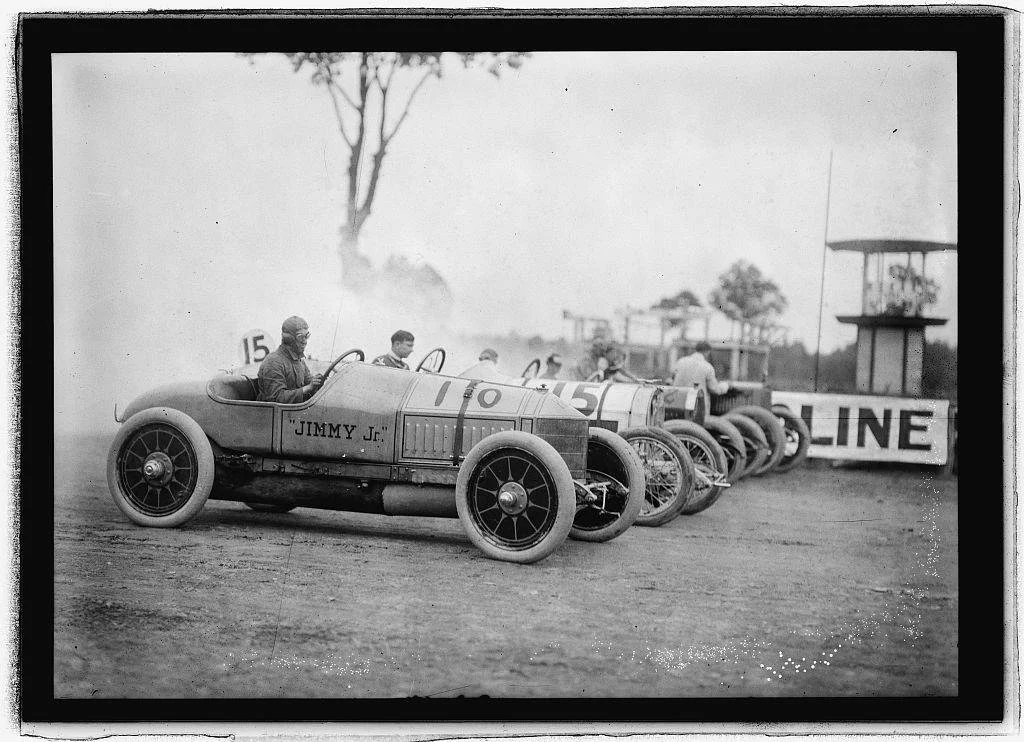
Benning Racetrack was a historic, horse, motorcycle and auto racing facility in Washington DC. Picture taken in 1917.
Washington, D.C.'s history of public street racing largely reflects illegal drag racing and, more recently, street takeovers. It developed alongside the region's postwar car culture, particularly in working-class Black communities, and repeatedly shifted locations as development and police enforcement changed the city.
The surviving public record is fragmented: newspapers generally covered crashes and arrests rather than documenting the culture itself. As a result, exact start dates and definitive lists of racing sites remain difficult to establish.
Postwar roots
Organized drag racing became nationally popular after World War II as inexpensive cars, hot-rodding, and suburban highways proliferated. By the 1950s and 1960s, the Washington region had both sanctioned motorsports and informal racing on public roads.
Legal drag strips in the wider metropolitan area gave enthusiasts-controlled places to race, but their distance, entrance costs, and limited operating hours pushed some drivers onto public streets. Broad, straight industrial roads were especially attractive because they carried little late-night traffic and had relatively few pedestrians.
Unlike Southern California's well-documented hot-rod scene, Washington's racing culture was largely local and informal. Participants learned about races through service stations, garages, clubs, and word of mouth.
The classic drag-racing era
From approximately the 1970s through the 1990s, illegal races and late-night car gatherings became familiar in industrial sections of Northeast and Southeast Washington. Roads frequently associated with this culture included: Common areas where street racing took place in Washington Dc were the V-Street in DC (warehouse area with nobody around at night). Another, perfect section of Route 29, a few miles NE of Silver Springs, MD. Part of Route 50 before it was opened up. Section of Route 193 near the University of Maryland and the section of East-West Highway near PG Plaza. The exact geography changed constantly. Racers favored long, straight stretches with few intersections and moved when police began concentrating on a particular location. A typical gathering was larger than a spontaneous contest between two cars. Spectators parked along the roadway, someone informally started the race, and two cars accelerated over a short distance. Money, automotive reputation, and neighborhood pride could be on the line. American muscle cars dominated earlier decades; modified imports, motorcycles, and increasingly powerful factory cars later broadened the scene.
For many participants, these gatherings also functioned as a social institution. They connected drivers, mechanics, body shops, car clubs, and spectators across D.C., Maryland, and Virginia. That cultural dimension helps explain why racing persisted despite arrests and periodic crackdowns.
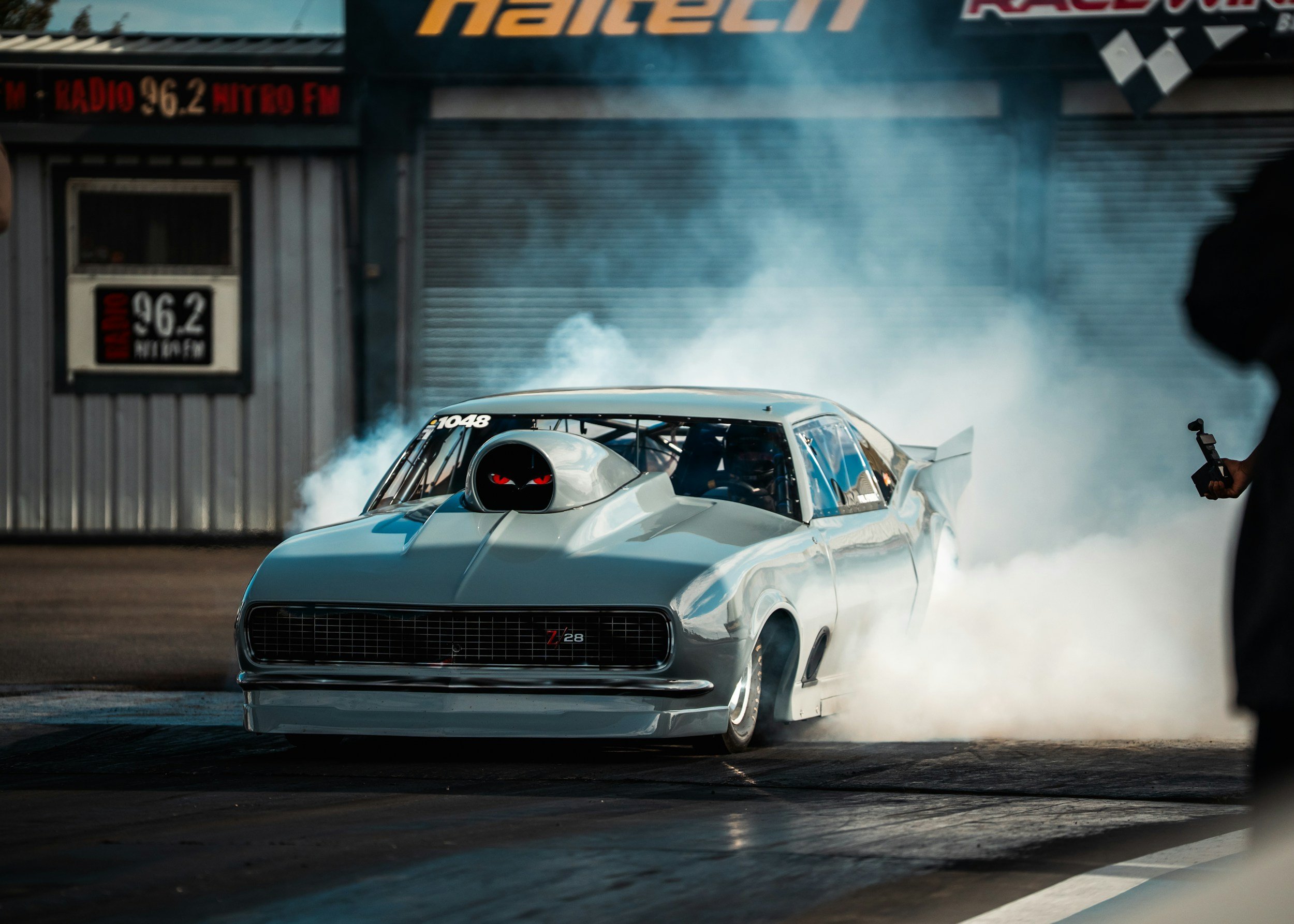
What happens when you mix cars, men and speed? A cultural expression that began as drag racing and eventual morphs into something called The Run.
Winston Miller, a Black 54-year-old man, is a dual Jamaican and US citizen and part of “The Run” culture; he first got a taste of it riding with a friend's older brother from the church he attended in a Chevy Monte Carlo. Winston was in high school and from the passenger seat, he helped the older brother navigate traffic. In his introduction to “The Run”, you can see the cerebral nuances he started developing by noticing the environment and other drivers of cars around them. It was the beginning of a lifelong joy and passion that resonates with him to this present day. Much later, one day while walking through Manhattan, New York City, he noticed something that captivated his attention. It was a “red BMW called an E30 M3, coming towards him with a spoiler that jumped out at him!” The color is interesting because red stands for power, and it shocked him; later, that car would become his weapon of choice when he was fully ingrained and a seasoned driver in the public street-racing lifestyle.
Winston started driving much later around 20, in Brooklyn, New York. He initially experienced what most young, inexperienced drivers do: jitters, nervousness, and learning his way on public streets as a new driver. But at 21, he got his first car and one day in Maryland right after finishing college. He was at a light in his car when another car took off, and he decided to give chase; in that moment, he felt a thrill and was subconsciously introduced to what he would later discover as “The Run.” Naturally, a chase instinct activated within him, an intrinsic sign of someone who is part of this cultural expression. Winston recalled his first official race as an away game at Hampton University because he did audiovisual for his school and videotaped the girls’ basketball team games. During the trip, he was driving a red Dodge Spirit on the highway when a silver or gray Acura Legend pulled up beside him, and they both took off on a mostly empty road with plenty of room to race and play. However, in this moment his senses would be excited, and he would now decipher what is this that pulls towards my identity.
There is a language spoken among members of this need for speed fraternity. What lets someone know another car is trying to race them on a public street or highway? The model and type of car (sports version), the sound of the car roaring from aftermarket exhaust pipes, and modifications like shift gauges, spoiler-size skirts, and shift lights. Another sign is a young person at a light playing music loudly. Also, if they are at the light and they start “staving,” which is edging up little by little while revving their engine. There is also a criteria-mindset that is prevalent with public street racers. The noise they vibrate through traffic announces that they are looking for a challenge from an unidentified member of the club; they move and position themselves through traffic to find the ideal launch spot, changing lanes efficiently so they can get to the light. The criteria mindset is vital because sometimes it is not just the car but the person behind the wheel driving the car. Street racers tend to be loyal to specific brands like Porsches, Mustangs, Volkswagens, BMWs, or Corvettes, depending on their personality, somewhat like people who work at historic fashion houses like Chanel, Dior, Versace, Gucci, and Louis Votton. They create preference and competition not only through driving skill and individual talent, but also through the companies that build vehicles to showcase their abilities.
They are car enthusiast and historians of the car brand they own. These drivers merge with their cars and represent the models like legendary wardrobe apparel, knowing they are the best dressed and prepared to strut their stuff at the ball. While pedestrian drivers watch in suspense from the public crossing streets. The verbal esoteric language they speak to one another is: are you stocked, are you modified, do you have a flash upgrade, and do you want to run? An interaction and sharing between oral speech and technology. The lingo will change depending on what part of the country you are in. This is a dynamic imprint of folklore: variants of cultural expressions in different regions.
Another part of these cultural expressions is the emotions of every person who chooses to be part of this select group. As Winston said before a race, “there is excitement, a touch of fear and elation of happiness.” All these feelings connect back to the thrill of the race. The unknown, because there is danger when racing on public streets, but the heightened sense of anticipating what other drivers are going to do while you are focusing on the person you are racing against and what they might be capable of is a rush of adrenaline! Road conditions and weather, if it's nighttime or daytime also affect the quality of the run you are about to compete in at full throttle. Another aspect is Winston's belief in Jesus Christ as his savior, protector, and his faith that he will come out of the run unscathed. It is not just physical demand that is required but a spiritual journey into the unknown and the belief that he is having an intimate moment and conversation with his creator, that only they can understand what is happening in split seconds at a tremendous speed of last second decision making. Mentally, he runs all the possibilities through his mind like a high-speed operating computer system.
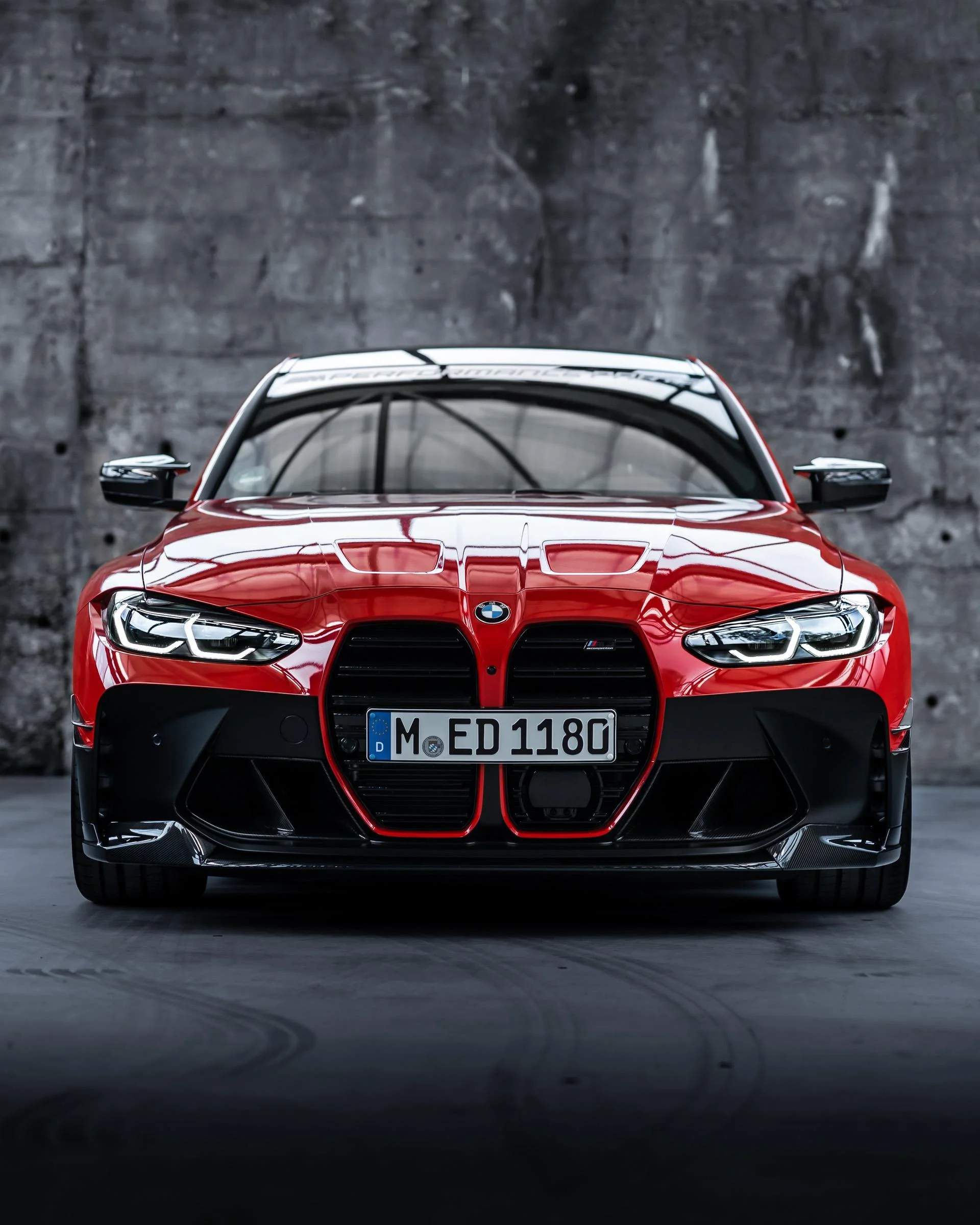
BMW M3
“Racing is a profound mirror for life, teaching us about risk, focus, and resilience.”
As he states in the interview, his cautious approach comes down to: are his brakes good, are his tires good, and is the car running well, with no noise that would indicate it needs service? How does his body and mind feel? Is he tired or groggy? Winston's racing style leans heavily on safety; he doesn’t want to get tangled up (accident) with anyone, and he wants to race another day. People who like to run include doctors, lawyers, computer techs, teachers, and audio-visual techs. In short, everyday people from all walks of life take part in this culture, bringing their beliefs, customs, style, and habits to the street racing scene. Some are overly aggressive and inexperienced, but that's part of your job as a street racer: to decide who you are racing. What is the other car doing? Is it fast? Is it quick? Is it about the same speed as my car? Within this sphere of swirling chaos, information starts coming in and creates strategic advantages as the race builds in real time.
To the untrained eye, it looks like two reckless drivers weaving, swerving through lanes and speeding from light to light, or on an open vehicles-filled highway. But what is actually happening skilled drivers manipulate the surrounding traffic and paint a sublime picture of what high-level driving looks like when both drivers are in sync and doing what they love. Driving can express people navigating the human condition and finding meaning amid the twists and turns of life's downhill setbacks and uphill triumphs. Mostly a male-dominated culture, with sprinkles of women who take part. The reason people like to be a part of this culture is the injection of testosterone, the speed, power, racing, learning skills, building up your skill, building on your talent, winning, and the thrill. We search to understand why we are here and embrace the moments we are afforded. These are not only racing skills, but transferable life skills in a world that moves too quickly.
But finding what is meant for you or knowing this hidden truth, pushing beyond what we consider safe. We discover what silently calls to us in places we can only hear. While we all strive to fulfill and accomplish our endeavors before our time is up… live unapologetically. Or (Voce sabe, viver a vida) you know…live the life.