Cultural Expressions of USCT
The United States Colored Troops, Black men, expressed themselves in unique ways as soldiers for the Union Army during the Civil War. In doing so, they displayed a distinctive form of creativity and originality as both Black men and soldiers. The cultural expressions of USCT soldiers were deeply intertwined with their struggle for freedom, their African American heritage, and their military service.
Symbols of Identity and Pride
Regimental badges & insignia: Many soldiers wore or added symbols representing their unit (like U.S. Colored Troops regiments), which became a source of pride and belonging. They believed in serving and protecting their country by offering their lives as a sacrifice to prove their loyalty and dedication to freedom and acceptance.
African heritage motifs: Though less common in official gear, some incorporated colors, patterns, or symbols that evoked African roots or cultural memory. They always had a direct connection to the heritage and tradition of the country these Black men came from, harking back to the land and speaking to the African cultural diaspora.
Patriotic emblems with meaning: American flags, eagles, and stars were often emphasized as statements of citizenship and a claim to rights denied to them. Many Black men yearned for the day the country they were born in would grant them the right to become citizens. When you are forced to build infrastructure and toil the land without compensation, you wonder what it will take to prove your worth. The Civil War gave them a reason and meaning in life to make this desire become a reality.
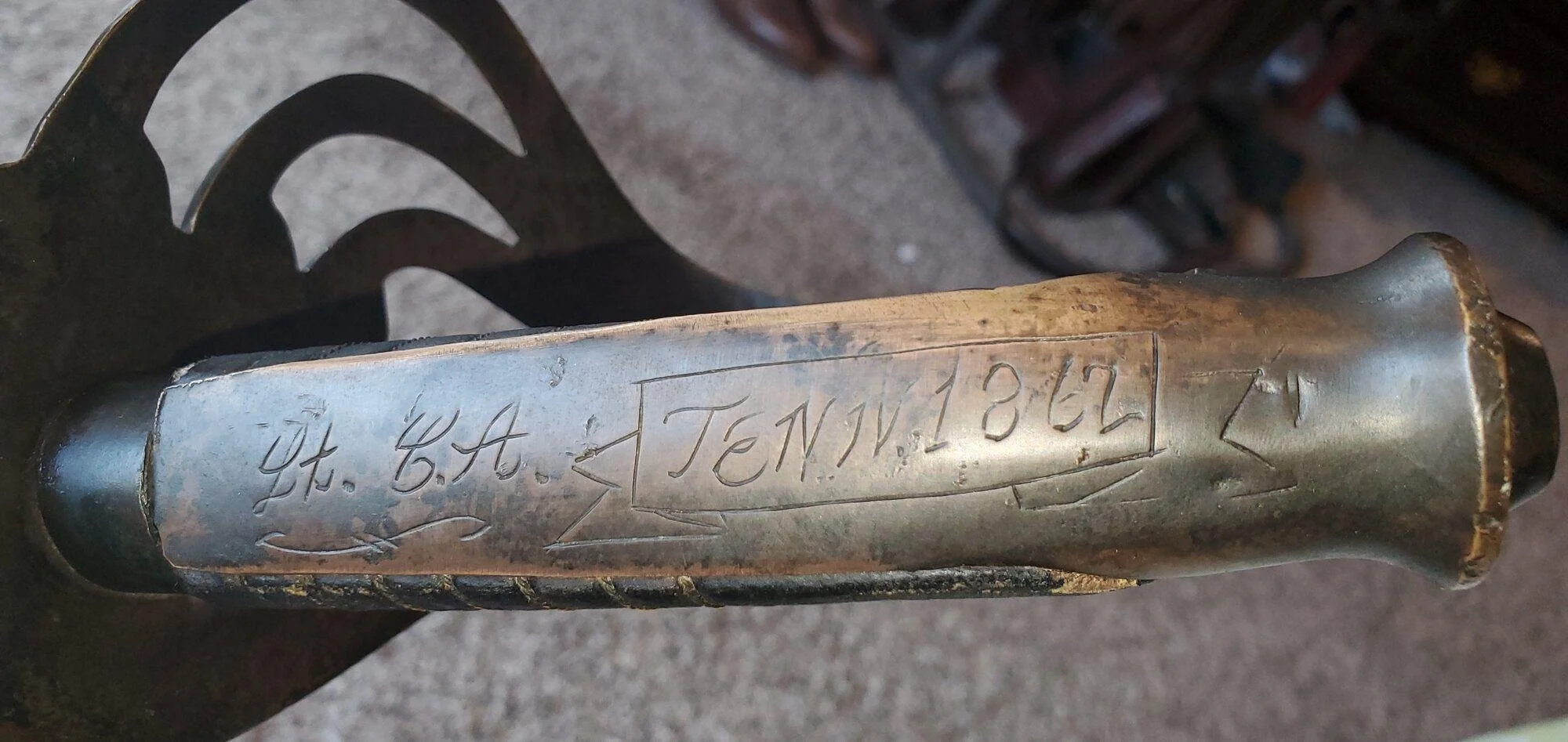
USCT Soldier sword hilt.
Personal Markings
Names and initials: Soldiers frequently marked uniforms, belts, or knapsacks with their names—important in case of death, but also an assertion of identity in a system that often-erased individuality. When we consider the names of American Black men, we must remember that these names were given to them by the people who enslaved them. Yet, like most people, they want to be identified and remembered so that my descendants and history will know who I was and what I did.
Handwritten messages: Some wrote short phrases, Bible verses, or slogans reflecting faith, freedom, or resilience. When we write, we share our thoughts, but more importantly, in this example, Bible verses connect us to the Creator and build courage and comfort, no matter what the outcome of battle would bring. The unseen faith is the intangible connection many Black soldiers relied on for the greater good in a nightmarish reality. The desired outcome was freedom from enslavement and citizenship that was maintained by their resilience in spite of difficult barriers.
Carvings and etchings: Wooden items like tent poles or boxes were sometimes carved with personal symbols or dates. These dates included important battles and places where they marched and camped. The wooden boxes would have had the names of wives, children, and other important people to the soldier. These etchings would have given the soldier something to remember, bringing a sense of peace and a future they could be reunited with, with a new social status in society.
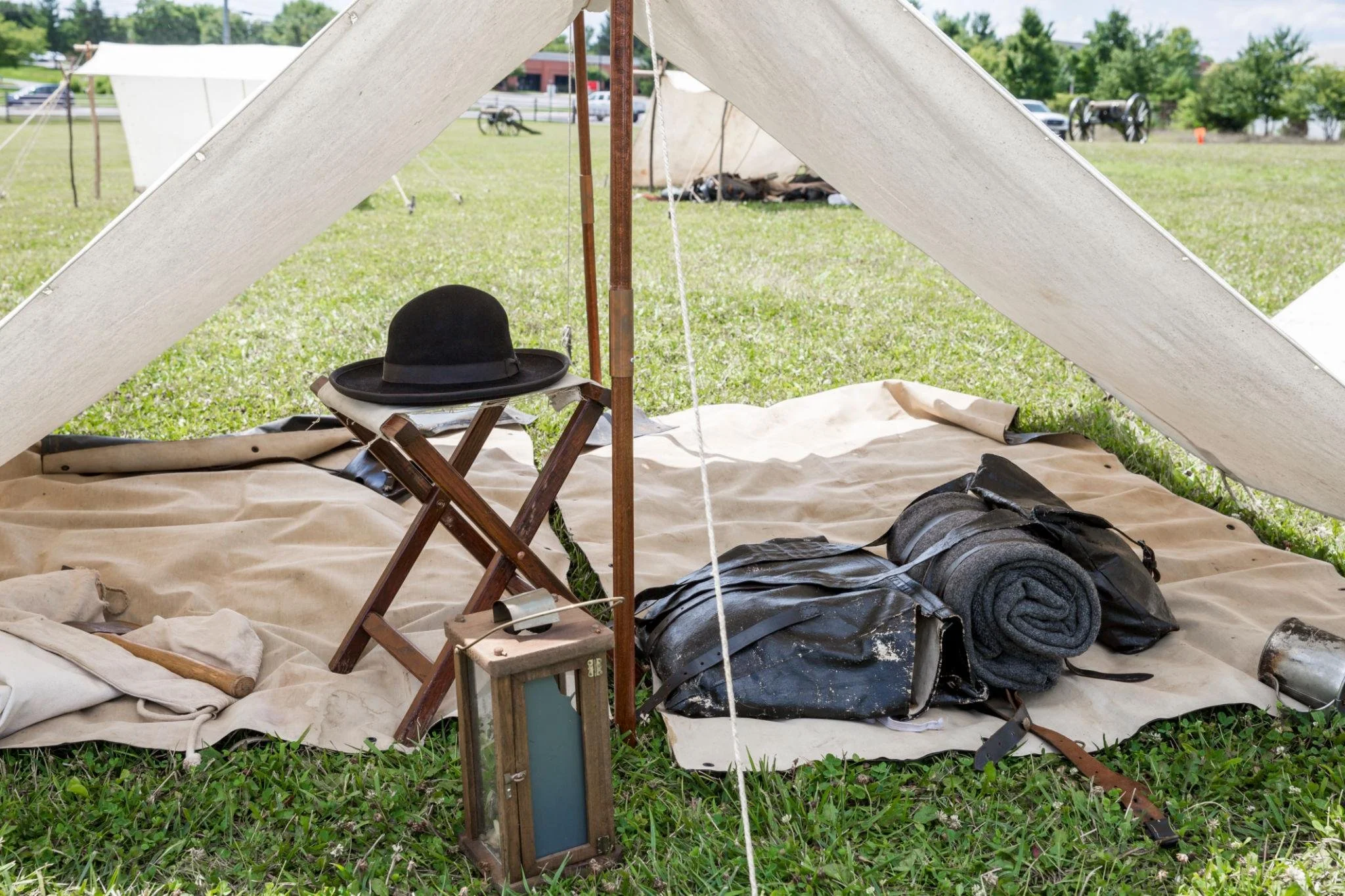
Civil War Tent.
Decorated Tents and Camp Spaces
Displayed photographs or keepsakes: Images of family members or loved ones were often kept or hung inside tents. During the Civil War, illustrated newspapers and publishing houses deployed the new profession of photographers and artists, whose drawings were converted into woodblock engravings. These prints provided a vital historical record of African Americans as camp employees, refugees, farm laborers, and United States Colored Troops (USCT).
Religious and cultural items: Bibles, hymn books, and small tokens reflected spiritual life and community traditions.These traditions are what bonded the community of USTC soldiers together in the face of danger and bigotry from White Union soldiers. Reading the Bible and reciting hymn books created a ritual among the Black soldiers that reassured them that victory and a new beginning were possible and within reach.
Improvised decoration: Soldiers sometimes arranged items or added small touches that made shared spaces feel more personal and dignified. Once formerly enslaved soldiers would have been proud to have a space they could control and maintain to their liking regardless of size. Decorating tents signaled autonomy and identity, rejecting the authoritative domain enslavement had imposed on their personal lives.
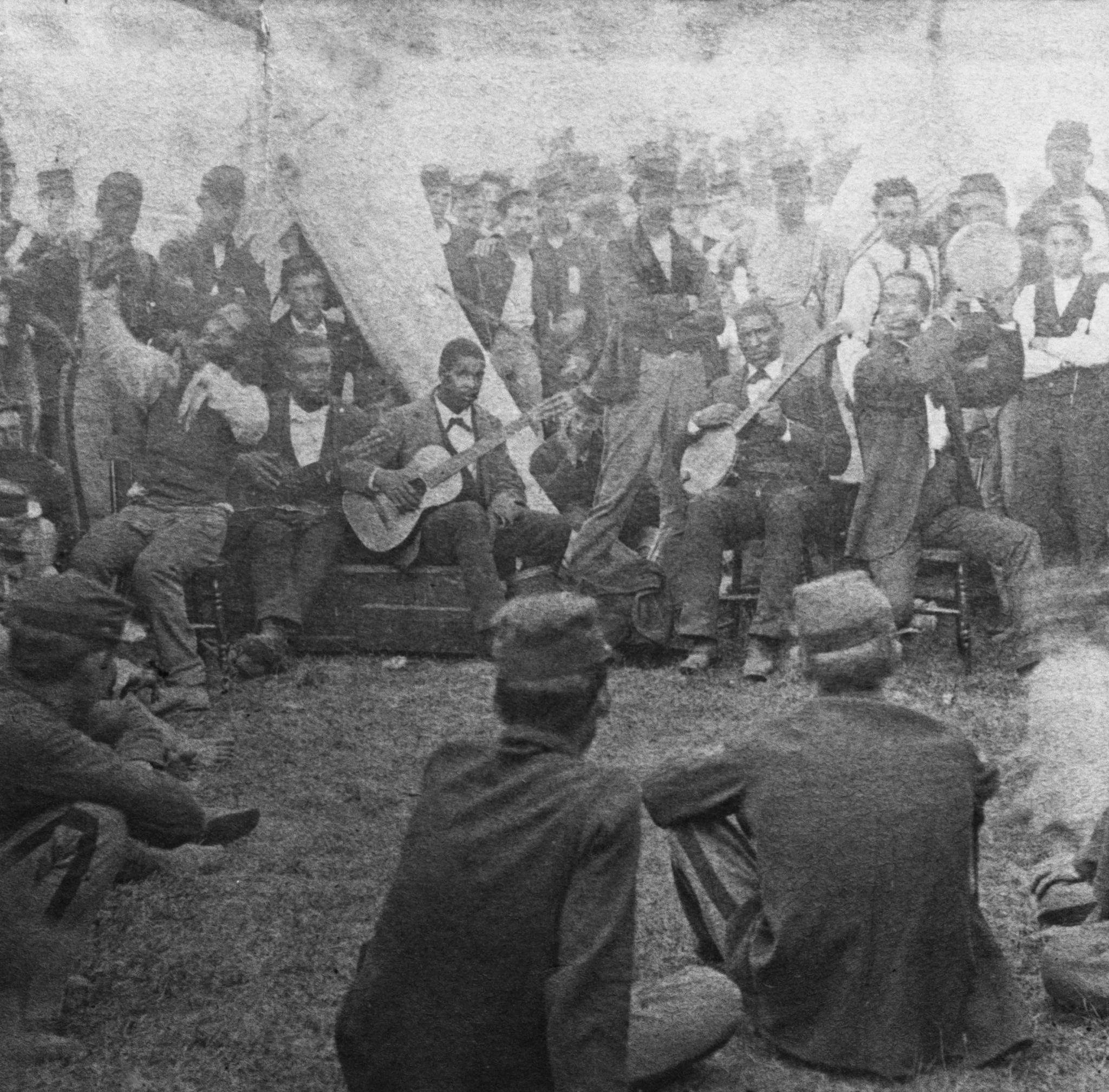
Black musicians in Civil War encampment.
Cultural Expression Through Objects
Musical instruments: Drums, banjos, or fiddles weren’t just entertainment—they were cultural expression and morale-building tools. Enslaved Africans originally brought a somewhat crude gourd instrument called a banjar to the Americas. Joel Sweeney a White man later refined the instrument into the five-string banjo.
Symbolic items: Certain objects carried a deeper meaning tied to African American traditions, storytelling, and oral history.
Visual and Material Culture
Soldiers personalized their uniforms, tents, or equipment with symbols or messages reflecting African American identity. Some units created flags that incorporated references to freedom, the Union, or religious motifs.
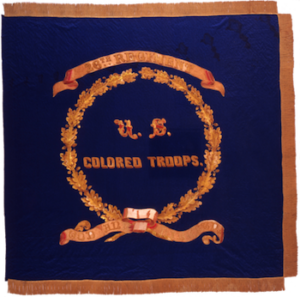
26th Regiment United States Colored Troops
Intangible Culture
Enslaved African Americans had a strong tradition of spirituals, work songs, and folk music, and these traditions carried into their military experience.
Spirituals as motivation and coded messages: Many spirituals, like “Go Down, Moses” or “Steal Away”, were sung to express hope, resilience, and a desire for freedom. Some spirituals also served as a subtle form of communication among soldiers, evoking the language of escape and resistance. The human voice is special: it sounds completely distinct from any other instrument or voice. A voice's range and words can transform people's emotions and thoughts, helping them believe in a movement. It is something you cannot touch but can feel, describing intangible culture.
Drum and fife music: The military itself had traditions of marching songs, and USCT soldiers adapted African American musical rhythms to these instruments, creating lively, distinct marching tunes.
Oral Traditions
Personal narratives of escape from slavery or life under oppression. Accounts of battles and military campaigns, which sometimes circulated informally among troops. Humorous or cautionary tales to lighten the mood during long encampments or marches. The old tradition of storytelling transferred language and cultural customs.
Religious Life
Prayer meetings and services: USCT units often held their own worship services, sometimes led by fellow soldiers or chaplains. These gatherings reinforced solidarity and moral resolve. Creating a sense of unity and community anchor amongst the USCT. These services were continuous throughout the campaign creating a ritual and passed on through traditions from the African American churches.
Sermons and scripture readings: Religious rhetoric frequently emphasized themes of liberation, justice, and divine support for the Union cause, blending Christian teachings with the hope of emancipation.
Environmental Ethics
The American Civil War left deep scars on the natural environment, reshaping landscapes through widespread deforestation, soil exhaustion, and pervasive pollution. Armies acted as powerful agents of ecological destruction—clear-cutting forests for timber and fuel—while intensive plantation farming hastened lasting environmental decline.
The "Biotic Soup": Millions of animals—including horses, mules, cattle, and hogs—traveled with the armies, leading to severe soil compaction, overgrazing, and manure runoff that contaminated local waterways. The staggering loss of both people and animals created new disease environments, spreading microbes and further polluting water sources.